Keep Ya Head Up: A White Lady's Journey Through Hip-Hop & Appropriation vs Appreciation

Updated: May 31, 2025
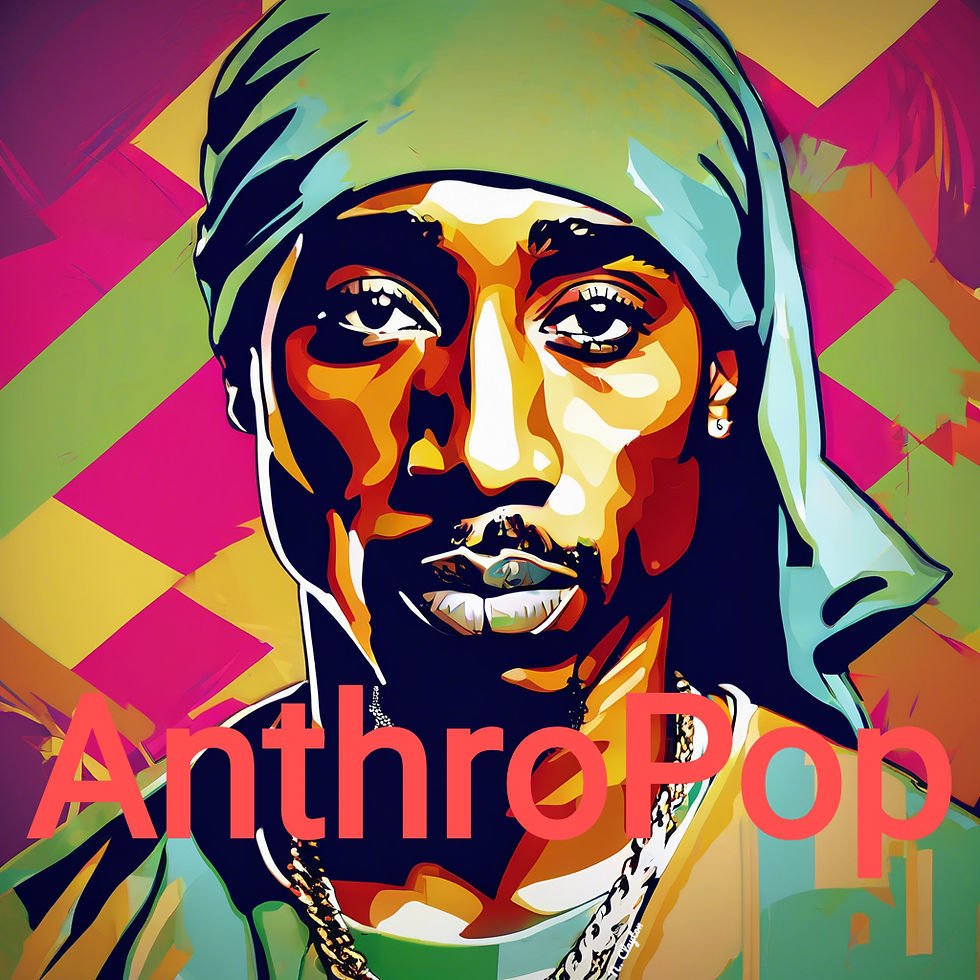
There I was, alone in my minivan on a late morning errand run, when I was so stoked to hear a Tupac intro on the radio. The only lottery-winning response is an emphatic, "YES!" And as if the last twenty years (or more, let's be real) hasn't passed, I'm now in the moment with 2pac soaking up the words and we're saying them together. Instantly, I'm transported to an earlier version of myself that my "mature" self is transposed over.
There’s something about the lyrics of "Keep Ya Head Up" full of resilience in it's rhythmic rawness that hits somewhere deep in the gut. As I catch the recognition of a middle aged white mom from Appalachia mouthing the words of a Black man’s protest song, I felt a familiar flicker of discomfort. Was it a mixture of sentimental nostalgia and disappointment at a continued culture war? Is it all bundled up in appropriation?
I grew up moving between very different Americas. Born in a working class white neighborhood outside Tampa, I remember being at my grandma's house where she was always the life of the party. She worked in the local school district, first as a bus driver while her children were young and later in various administrative positions. She often had black girlfriends from work stop by for a glass of wine. I can still hear them from my memories, their hysterical laughing while retelling old stories of their shared history and catching up on fresh gossip.
I was later bused into racially diverse schools before relocating to a small Appalachian town in my pre-teenage years. Music was a thread that carried me through all of it. We played Tupac, Salt-N-Pepa, and En Vogue as loudly and obsessively as we did Janis Joplin, Led Zeppelin, U2, the Beatles, or the Cranberries. We weren’t just listening; we were memorizing, inhabiting. These songs became part of our emotional scaffolding, the soundtrack to every unrequited crush, late-night drive, rebellion, and revelation.
I remember the white boys who sagged their jeans and mimicked African American Vernacular English, trying on identities like costumes. Even as awkward self-conscious teenagers, we knew something was off. It wasn’t that they loved hip-hop--it was that they were pretending to be something they weren’t. They hadn’t earned it, they didn’t live it, and they weren’t listening with humility. Back then, we made fun of them, but today, I think we were calling out something that now has a name: appropriation.
In my early twenties, I moved to San Francisco and was in love with the vibrant mosaic of cultures around me. There, I was welcomed into many cultural environments as an outsider and was graciously allowed to witness and participate. I was the guest, not the host. I knew that. And I listened.
In my mid-twenties, I dated someone who had grown up in the heart of posh San Francisco. His parents came from humble beginnings and had worked tirelessly, saving every penny and sacrificing endlessly to afford him a private education in the city. It was there that he found himself among the children of actors, musicians, and global elites. He was the humble kid among the privileged, but also part of a deeply diverse and culturally saturated social circle.
I remember stepping into the sky-rise apartment of a Saudi prince and visiting the beachside estate of a musician whose name you'd instantly recognize. These weren’t places I ever imagined myself, but they became part of my lived experience through proximity to that world. What tied these eclectic lives together? Music. Underground hip-hop, in particular, was their connective tissue. It wasn’t just something they liked--it was something they shared, curated, debated. Introducing friends to obscure tracks or new artists was a badge of social fluency. It was all about discovery and community.
Being invited into that space as a working class white girl raised in the South felt surreal---and yet, not performative. It was intimate, collective, expressive. Music has always done that for me: it opens the door inward. A song must draw me in through melody or beat first, but then I find myself swept into a story that unfolds from someone else's heart straight into mine. Stories of pain, struggle, joy, and glory--these are universal. And I’m endlessly grateful for the artists who let me glimpse those truths. That never feels like appropriation. It feels like being handed a gift across time and space.
Music has always offered me a space for reflection and identity. I've painted to John Coltrane, belted out Lauryn Hill in the car, and danced in the kitchen to Outkast. These weren’t just songs; they were sermons, stories, soul-maps. And while I could feel them deeply, I always knew they were someone else’s origin stories.
Music, especially music born from marginalized or niche communities, allows us to temporarily step into someone else’s lived experience, not to steal it, but to feel the resonance of their humanity. That bass line, that beat, that lyrical ache tethers us to something ancient and emotional. It becomes a mirror, reflecting something universal through a lens that is not ours.
When we reflect on our own identity through someone else’s story through genres like hip-hop, blues, rock, or jazz--we’re invited into a powerful emotional exchange. These genres emerged from struggle, from community, from protest and prayer. To sing along isn’t simply to enjoy, it’s to reckon with the roots of what we’re hearing. Who made this? Why did they need to say it this way? Do I feel what they are attempting to describe? And what does it mean that it still speaks to me, year after year, decades later?
Maybe when I was a teenager, I felt that everyone around me knew what was messed up about the world. We were all watching the same reality. We shared in decoding lyrics like sacred texts. There was a collective awareness--immature, perhaps, but intense--that things weren’t right. Only as I got older did I realize how many people let go of that clarity. They got pulled in different directions, toward jobs, status, comfort, convenience and often in ways that felt out of alignment with their younger selves.
That moment of shared cultural consciousness splintered. Not everyone held on to that sense of questioning. Not everyone stayed tuned in. Not everyone kept practicing the art of seeing someone else's reality at face value, and being empathetic enough to sit with it, even when it was uncomfortable or unfamiliar.
So what is appropriation, really? And where does admiration fit in? I think about how often white America has commodified Black culture without context or credit, cherry-picking style, slang, or sound, while ignoring the lived realities that birthed them. But, I also think about the power of music to transcend. To teach. To build empathy. To challenge who we are and what we think we know.
When I listen to Tupac today, I don’t pretend his story is mine. But I let it move me. I let it remind me. I let it call me out. His lyrics still speak truth in 2025 just as they did in 1993. And maybe that’s the key: to love culture without trying to own it. To witness with reverence, not performance. To sing along, not to be, but to better understand.
I'm choosing to believe that this chance encounter--hearing Tupac on a random weekday radio rotation--wasn’t just nostalgia. It was an invitation to revisit his messaging with fresh ears. Tupac didn’t simply make music; he chronicled social inequities, generational trauma, and the resilience of Black communities in the face of systemic oppression. In "Keep Ya Head Up," he speaks directly to the lived experiences of Black women, poverty, and the cycles of neglect in America’s social systems. His messaging combines poetic vulnerability with razor-sharp critique--a call to both compassion and accountability.
And in 2025, those messages still land. Families still suffer under the weight of economic precarity. Police violence, incarceration disparities, and structural racism haven’t vanished. If anything, they’ve evolved in new, politicized "alternative truth" forms. Tupac’s legacy isn’t a relic. It’s a mirror. And every time we hear him, we’re being asked: what has changed, and what have we failed to change?
And so I keep my head up--ears open, questions alive, grateful for the artists who let me glimpse their truths and for the lifelong journey of learning how to truly listen.
-AP


Comments